You never dive alone
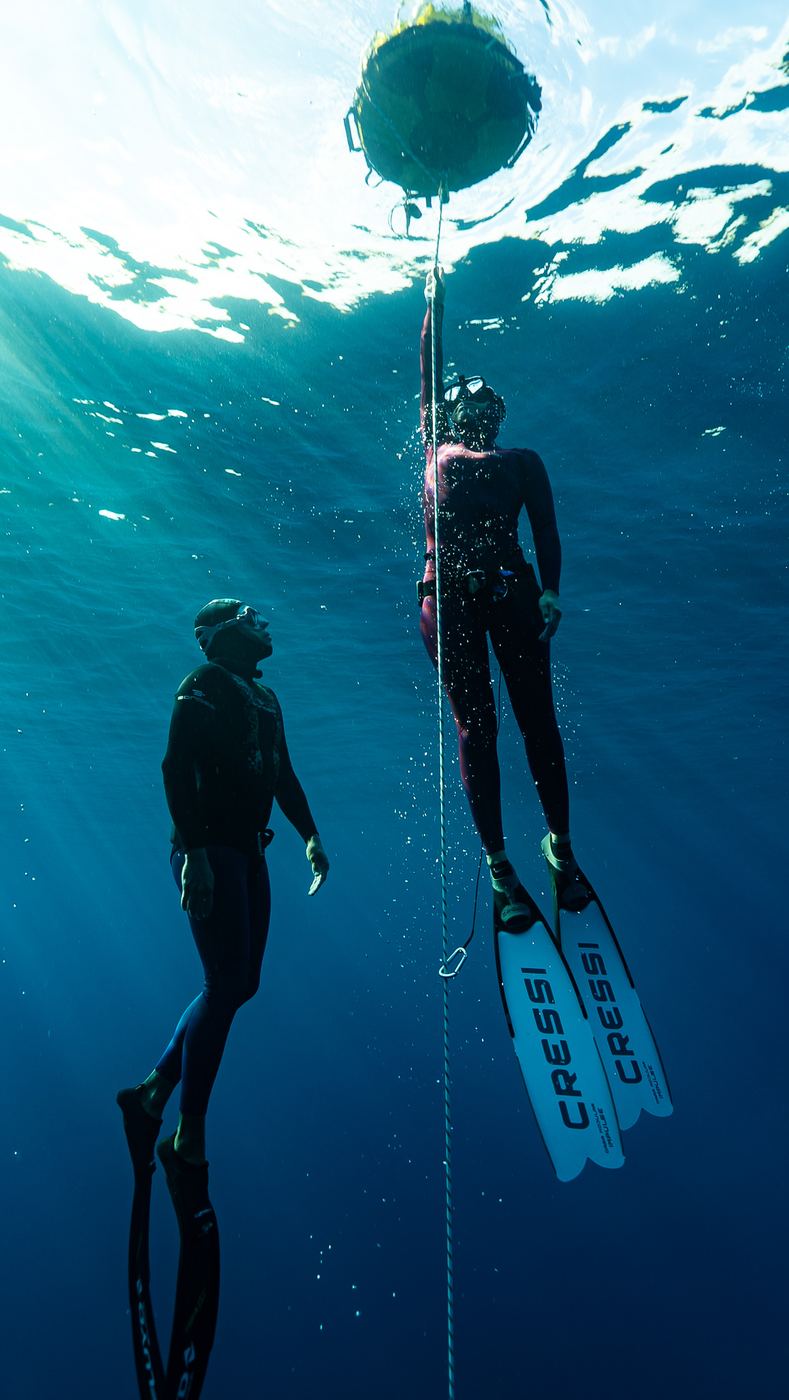
In freediving you always dive in pairs: one goes down and the other waits at the surface, watching. It is the first thing you learn and the thing we will repeat most through the course.
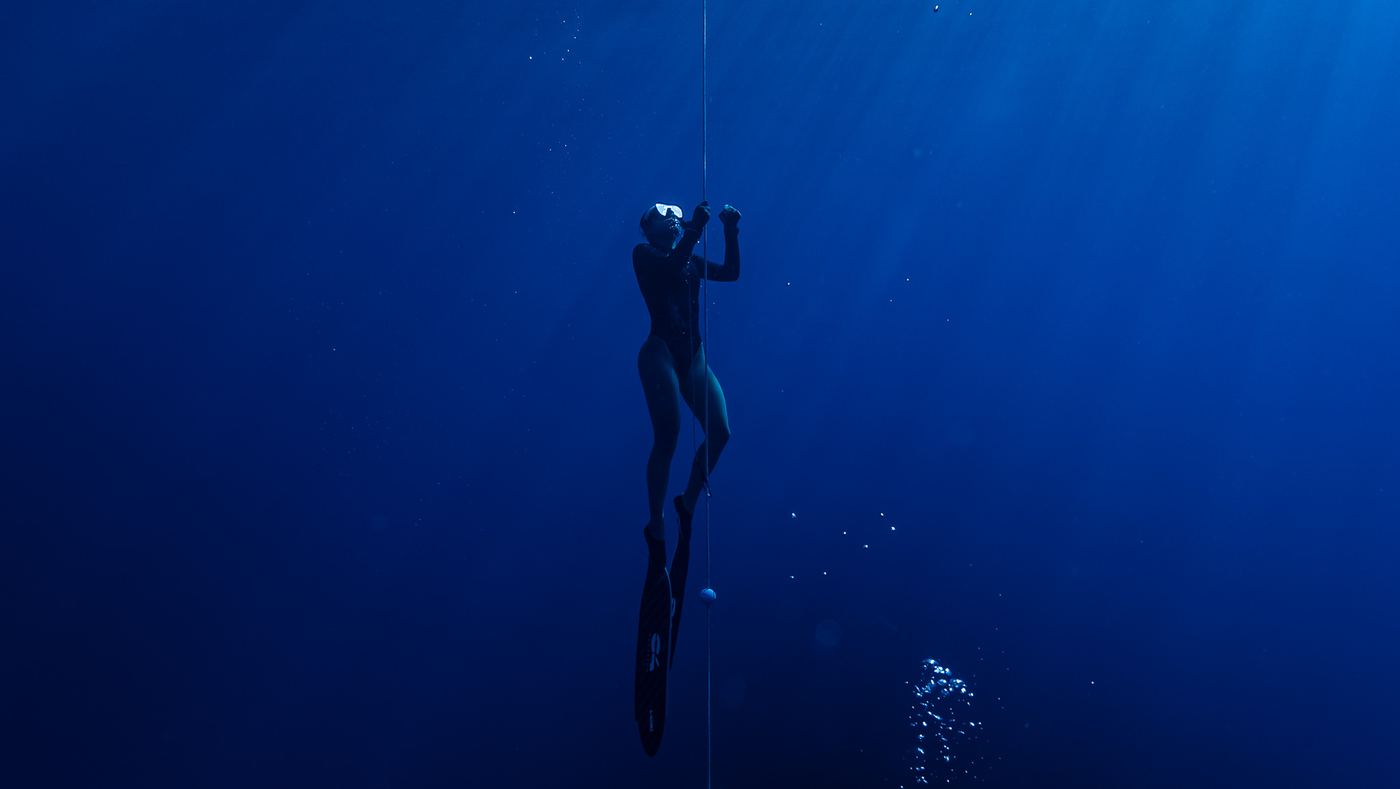
AIDA freediving courses in groups of two to four, with the line, the buoy and the sea we have here.
See the coursesHow I work
Four is the cap AIDA sets in open water, and I keep the same number in the pool even though eight are allowed there. That way I get to see every dive and go over it with you the same day. If you would rather have the course to yourself, that works too.
In freediving you always dive in pairs: one goes down and the other waits at the surface, watching. It is the first thing you learn and the thing we will repeat most through the course.
When you finish you get your certification in your own name, good at any school in the world. I certified with AIDA and it is what I teach with.
Half an hour at the end of the course, once you know how to go down: two dives spent photographing you. The images are included.
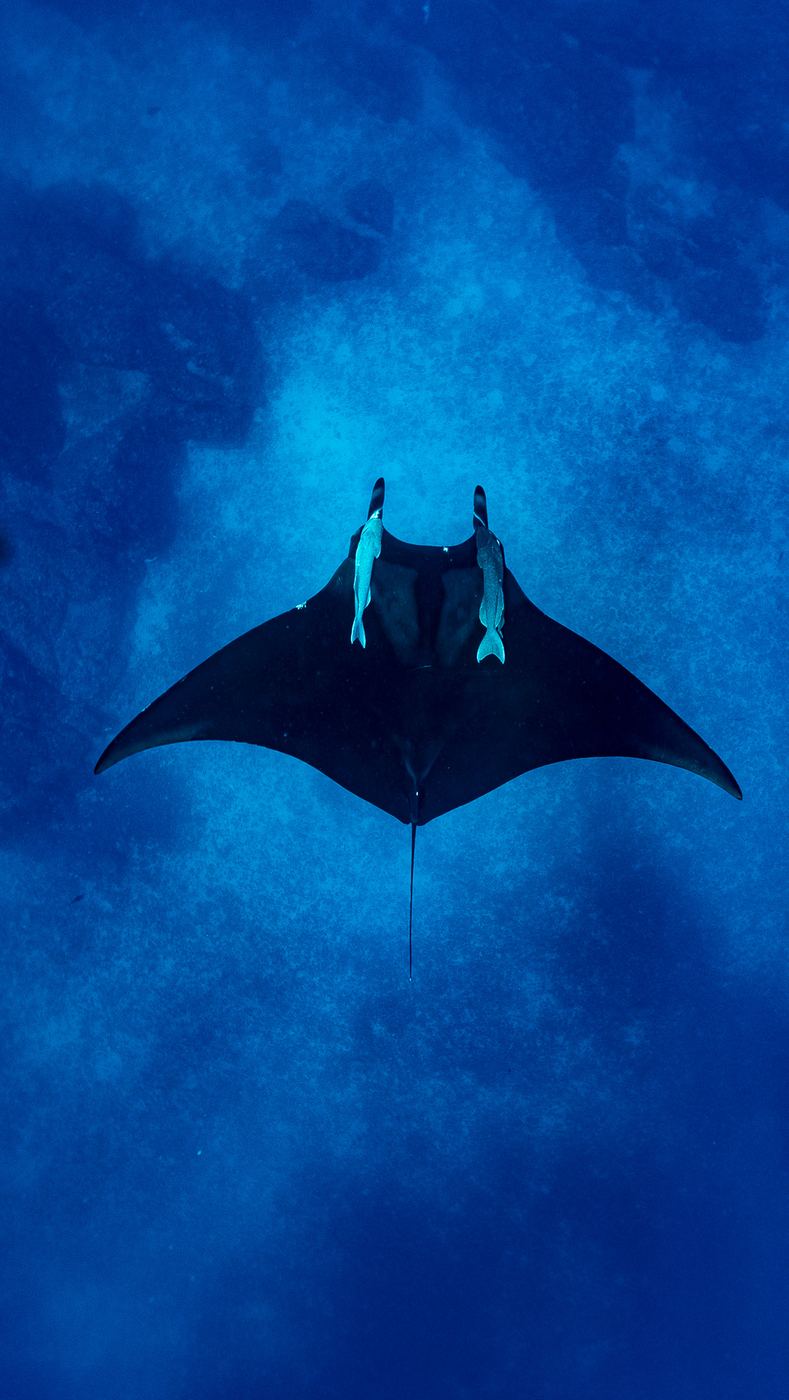
Migrations pass through here all year: whales, giant mantas, sharks, sardines, marlin, dolphins. Almost all of it half an hour from the dock.
First aid kit and oxygen, the buoy with its marked line, and a plan for the session that we go over before getting in. We always go out in daylight.
The whole course for you alone, or for you and whoever you choose, on the dates you set. Same certification, different pace.
The courses
Which one is yours depends on how much time you have spent in the sea. If it is not much, you start with AIDA 1. If you already swim, surf or spearfish, you can go straight into AIDA 2.
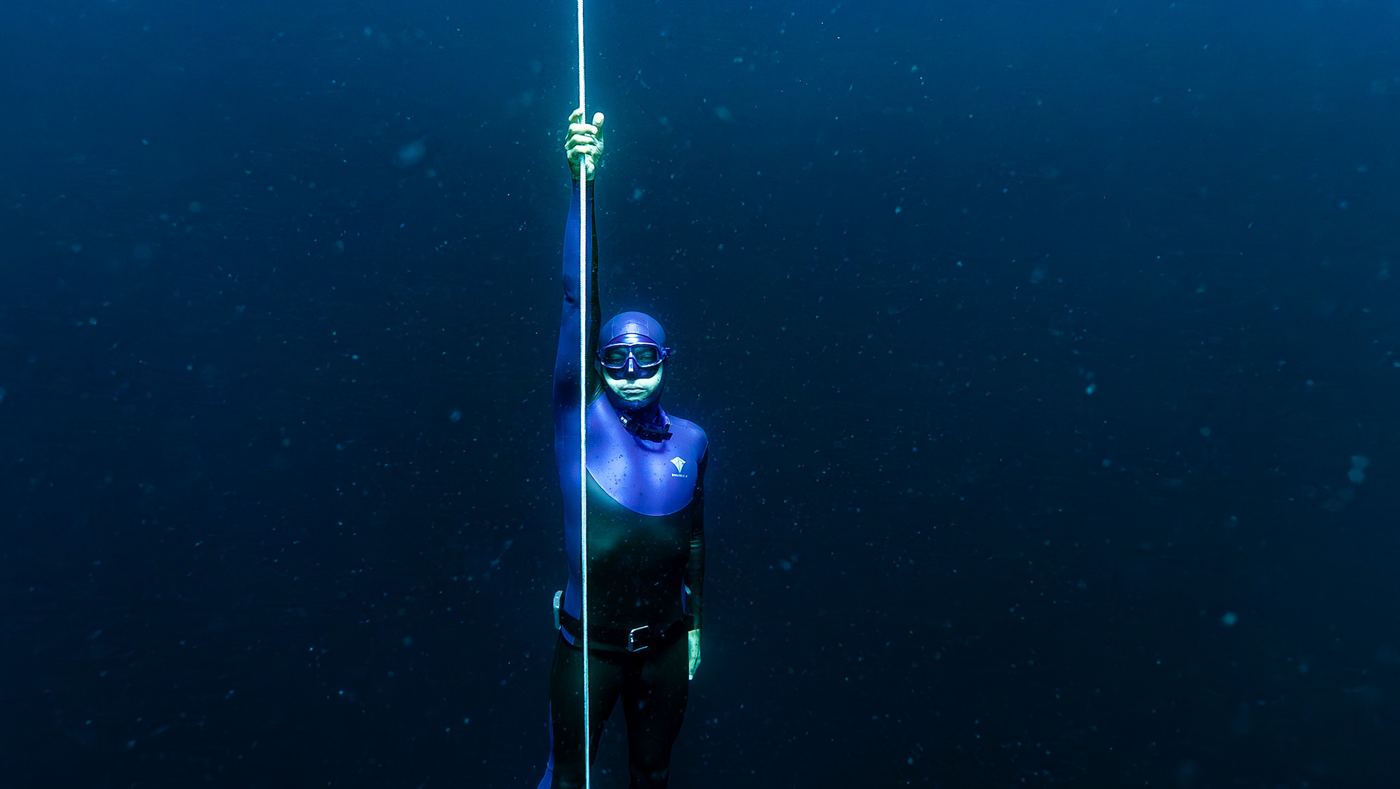
AIDA 1
This is the course for someone who does not spend time in open water yet. An afternoon of theory and pool, and the next morning we go out to sea. AIDA asks for no time or distance marks at this level, so nobody fails for not holding their breath long enough.
$330 USD per person
Just for you $600
For two, each $430
From three up, the price above.
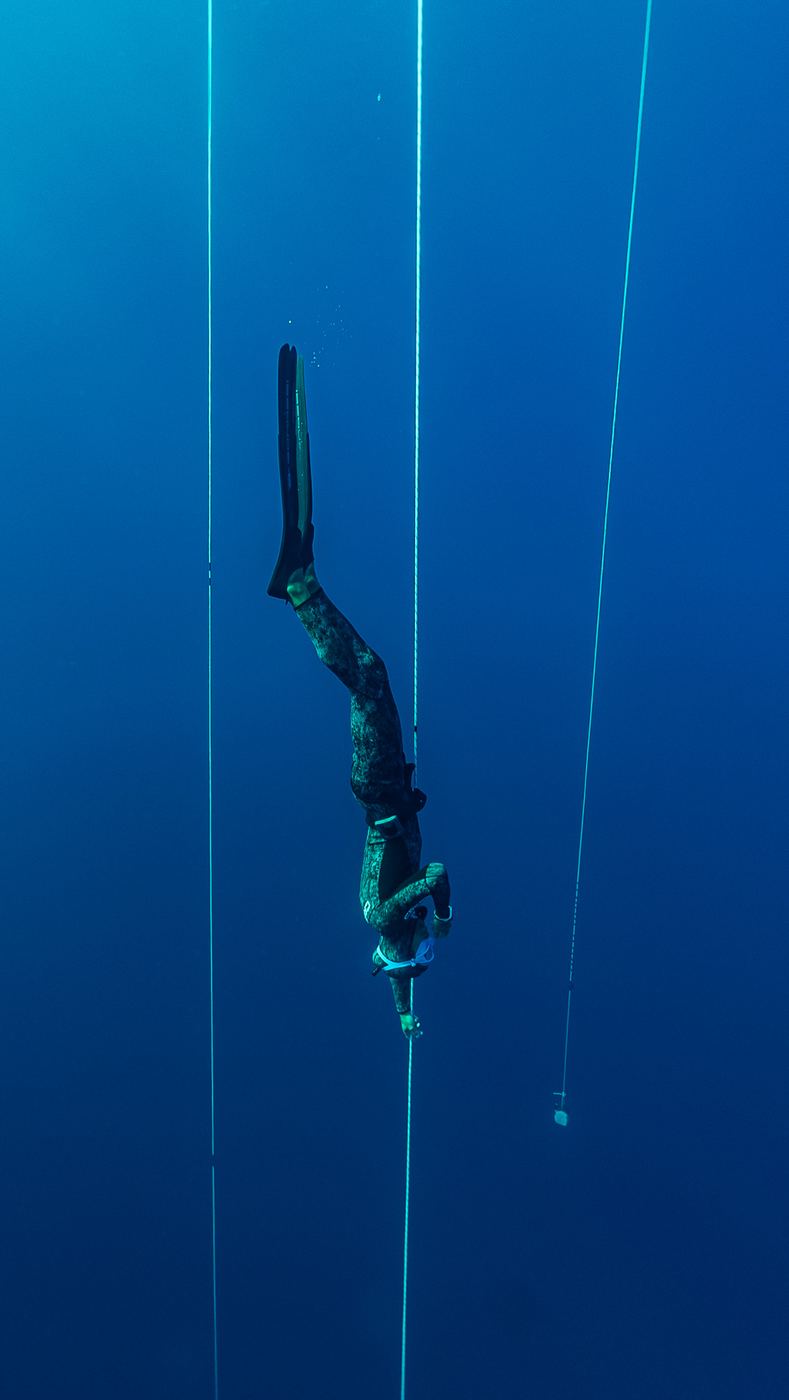
AIDA 2
If you already swim in open water, surf, spearfish or dive, you can start here: AIDA does not require AIDA 1 to enrol. It runs three days with three open water sessions, and you leave descending the line with technique and knowing how to rescue your buddy.
$565 USD per person
Just for you $1,035
For two, each $730
From three up, the price above.
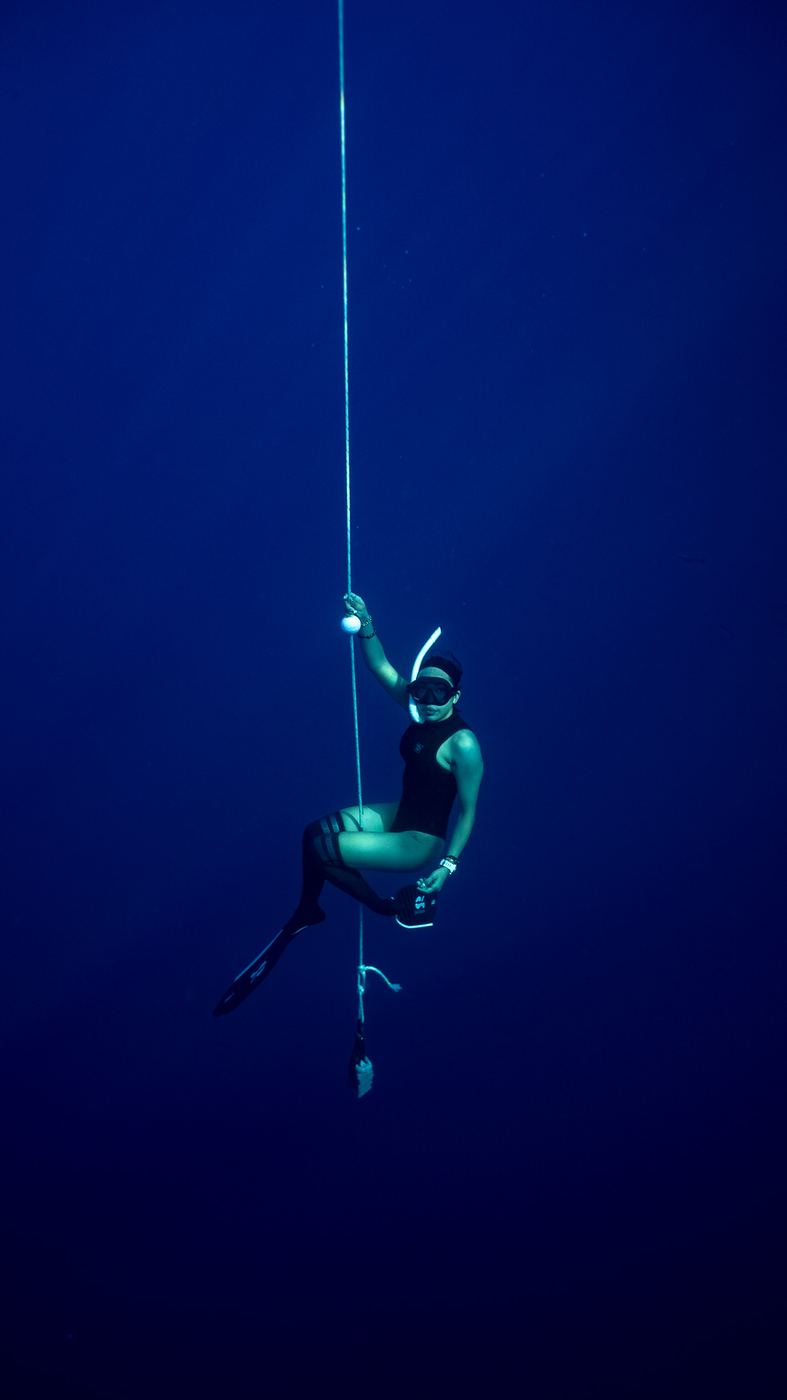
AIDA 3
At this depth the body stops floating and sinks on its own. It is called free fall and it is what shows up here, along with training tables, Frenzel and rescues from depth. Four open water sessions over three trips, two in the pool and three of theory.
$830 USD per person
Just for you $1,545
For two, each $1,080
From three up, the price above.
If the sea does not work out
Open water puts some people off, some get seasick and some simply do not have the weekend free. AIDA has two certifications that are completed entirely in a pool, with the same theory and the same water sessions as the sea course. They are AIDA International certifications.
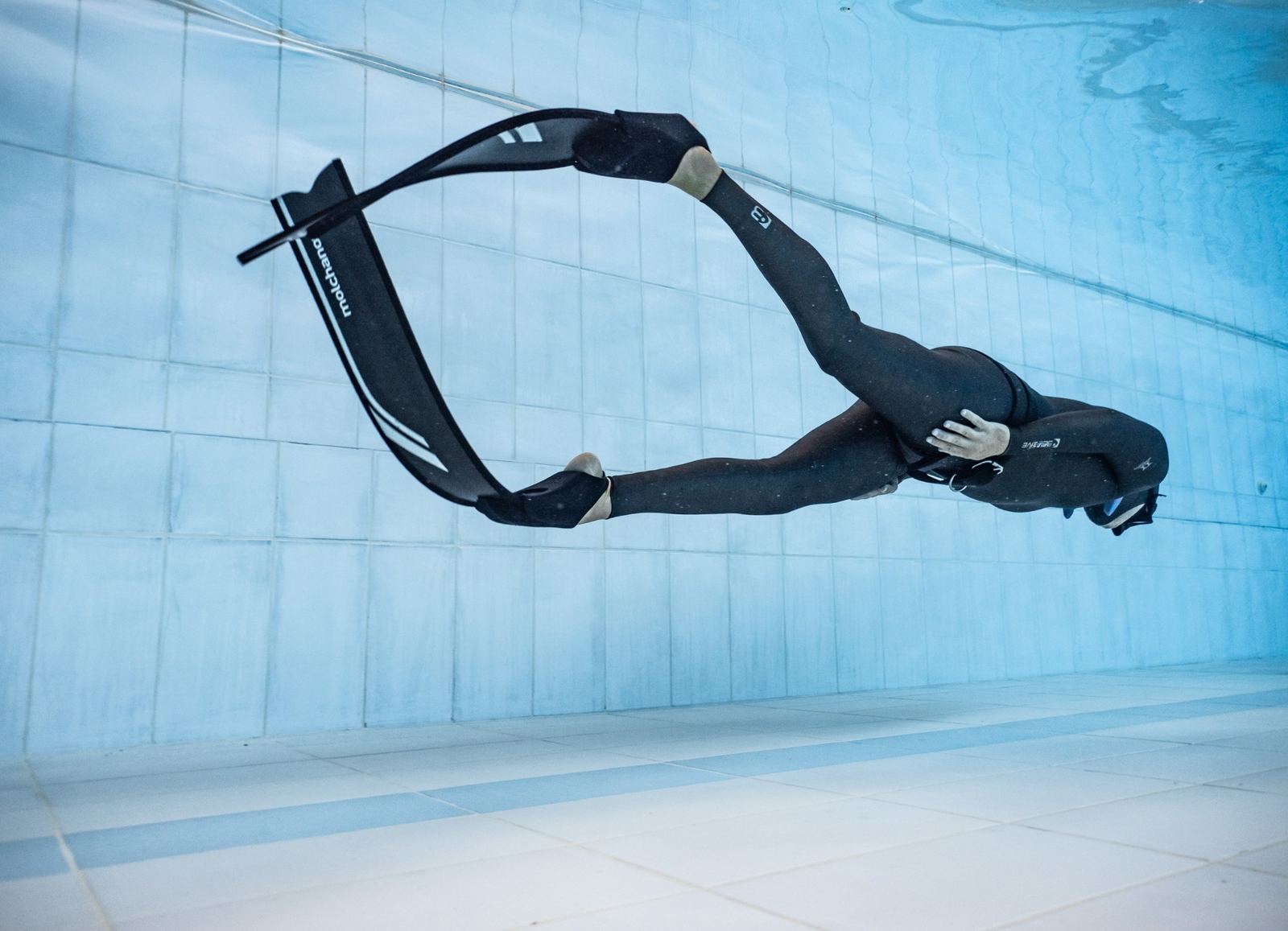
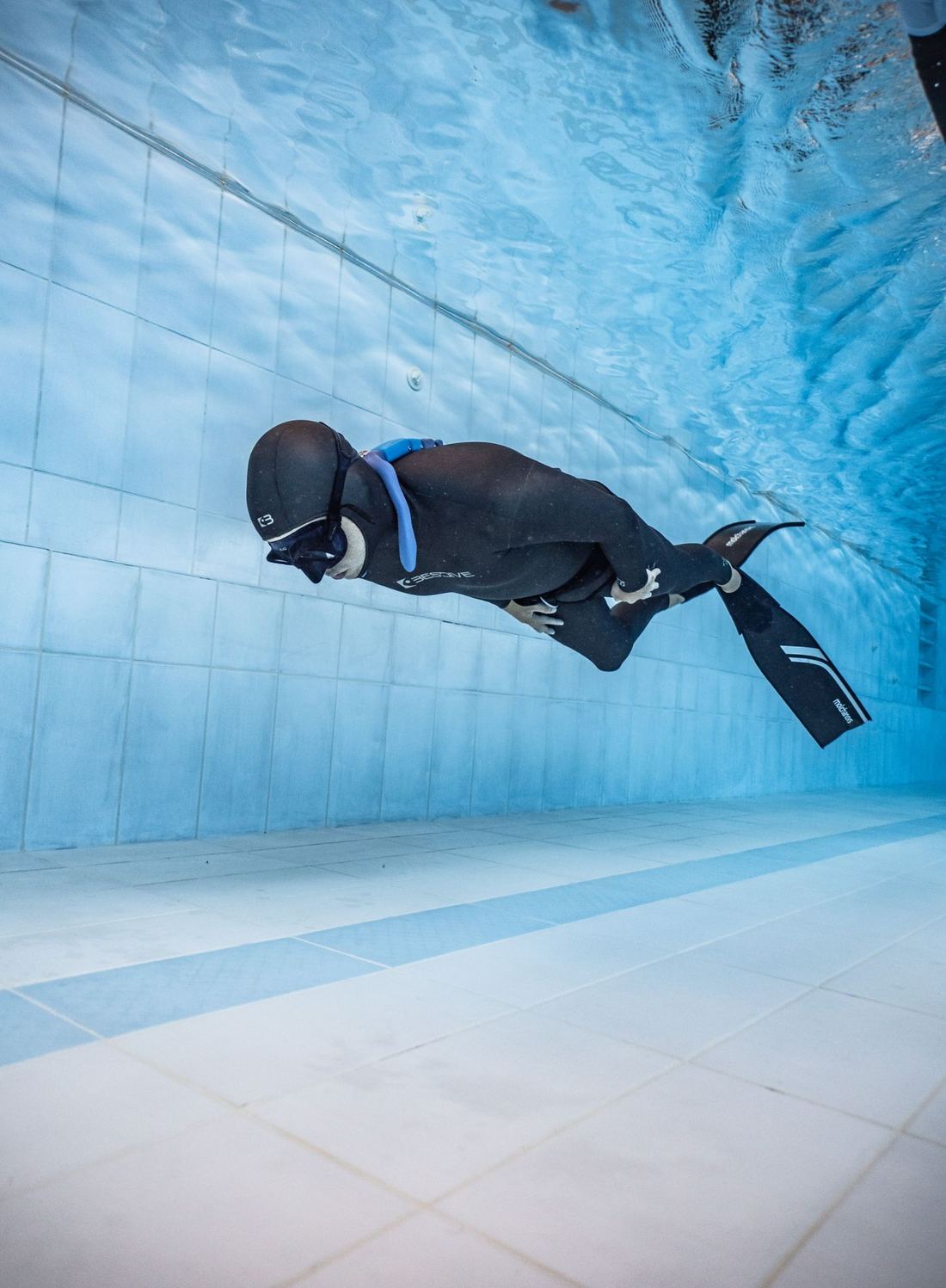
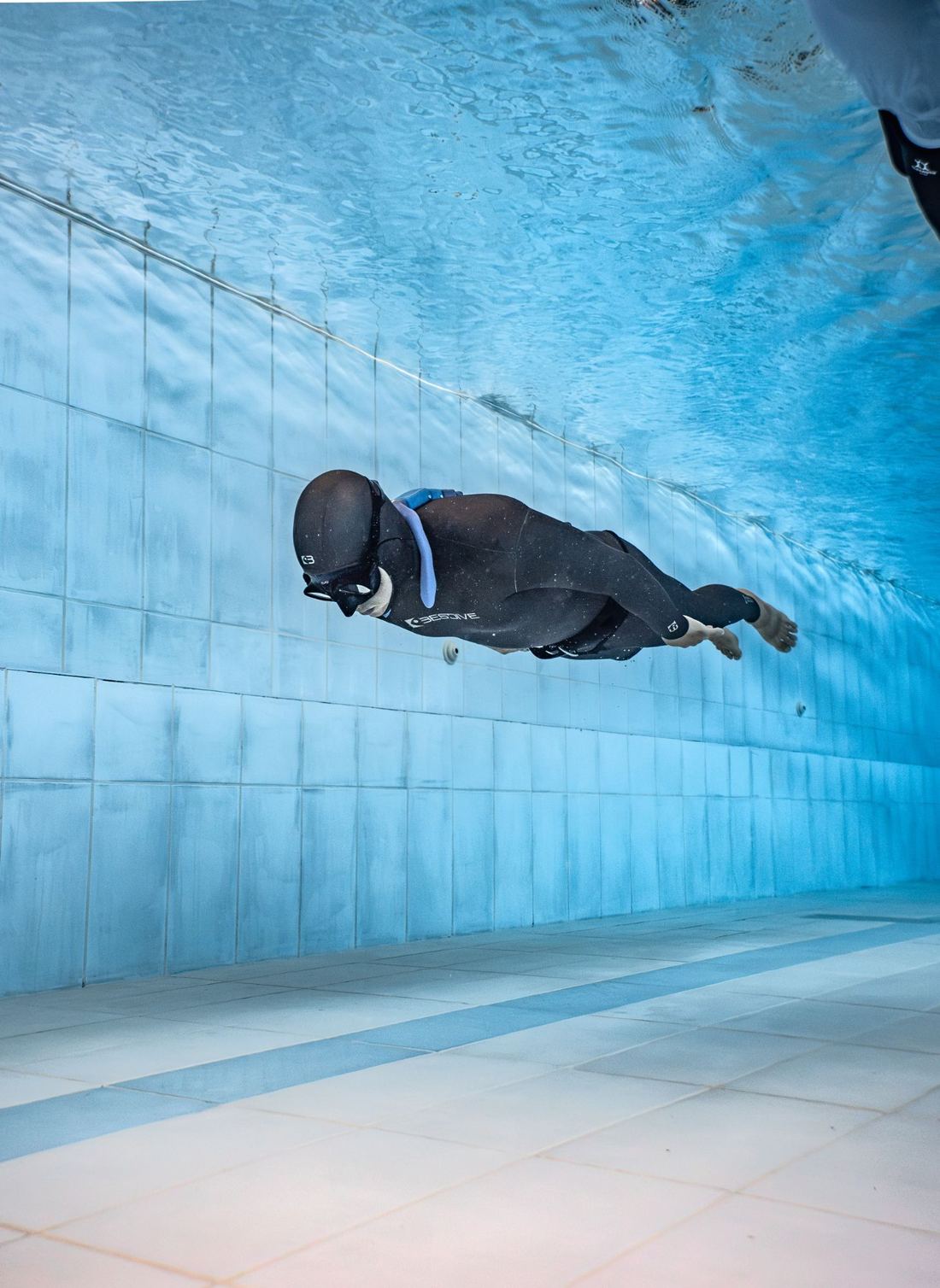
The full AIDA 2 minus the three open water sessions. Theory, pool, exam and an international certification.
$310 USDTraining tables, a two minute forty five static and a fifty five metre dynamic.
$460 USDA single session to see what this is about, with instructor and gear. No paperwork, no commitment.
$50 USDFour is the cap AIDA sets in open water, and the one I keep in the pool too, where eight are allowed.
One goes down and the other waits above, watching. It is the first thing you learn and the thing we repeat most.
At the end of the course, once you know how to go down: two dives spent photographing you, images included.
What happens down there
I turned up thinking freediving was about holding your breath and having good lungs, and it took me a while to understand that is not where it goes. This is what I would have wanted to know before my first dive.
Your body does not measure the oxygen you have left, it measures the carbon dioxide building up. That is why the urge to breathe shows up well before there is a problem, and when it feels like you cannot hold on any longer, you usually have air to spare.
Once you understand where it comes from, it stops frightening you. It arrives all the same, the diaphragm pushes and the chest complains, but you can let it pass the way you let a thought pass when you meditate, and keep going down.
The strangest part happens when you stop fighting the water: you reach the bottom without noticing you got there. A thirty metre dive has felt like fifteen to me.
That is why the course starts with theory and not with the water. It is hard to relax when you do not know what is going on inside you.
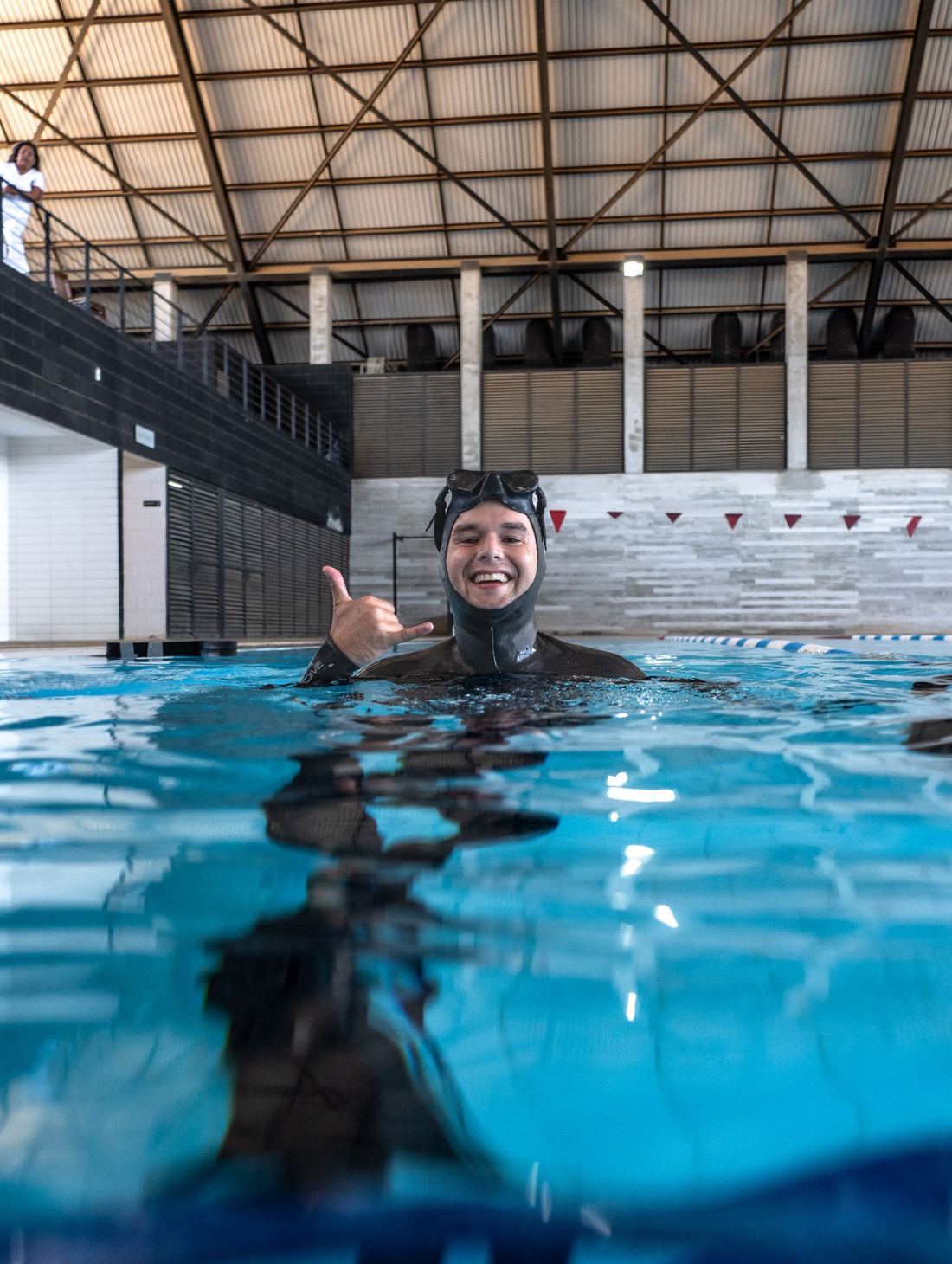
Who teaches you
It started with swimming in open water. One day, at a beach near here called Arbolito, I swam for about ten minutes alongside a turtle that would not leave, and I came out of the water with a single idea: I wanted to be able to stay down there longer. That is what took me to freediving.
The camera came from the other side. I started with a drone, out of the water, then bought a housing and began shooting surf. Once I had a depth housing and was going down the line, the photographs went down with me. I look for symmetry, space and light, but what makes a photograph worth it is the moment, and in the water there are moments all the time: a fish swims in, the tide turns, the sun moves. I have worked with brands — videos of Baja for Fonatur — and with other freedivers, and that is where the photographs you take home at the end of the course come from.
With a camera in my hands I dive more relaxed. You are watching what you are about to shoot and you forget the tension in your body: the shoulder tightening, the throat starting. The alarms are still there, you just do not notice them.
I certified as an instructor with AIDA and I still dive most weeks, almost always in the same sea where I learned. Before the water I trained as a Gestalt psychotherapist, in 2017, and I still see clients now and then. It helps: a good part of this job is sitting with someone while the fear comes down.
Free, by email
Seven things that happen to your body underwater, a chapter on what is actually dangerous and three breathing exercises you can do at home, without getting in the sea.
What people always ask me
AIDA does not require it. If you already swim in the sea, surf or spearfish, you go straight into AIDA 2. If open water is still new to you, you will get much more out of AIDA 1 first.
You go down the rope, at your own pace, with the instructor an arm away. What costs most at that depth is your ears, and that is worked on from day one.
Almost nobody gets there on day one and almost everybody does by day three. What changes over those three days is the relaxation, not the lungs.
In AIDA 2, if you complete the pool but the sea gets in the way, you leave with AIDA 2 Pool or with AIDA 1. The course is not lost. In AIDA 1 there are no marks to reach: what is assessed is that the skills come out right.
Early, which is when it is flat. That is why the courses put theory and pool in the afternoon and leave the sea for first thing the next day.
First aid kit and oxygen, the buoy with its marked line, and a plan for the session that we go over before getting in. We always go out in daylight.
If you have never dived we start there, and nobody goes deeper than they want to. If you are already certified, tell me how far you get and we put together a plan.